Health and Safety Policy for Removals Movers
 Purpose: This Health and Safety Policy sets out the commitment of our removals movers and removal teams to provide a safe working environment for staff, clients and members of the public during all types of moving, relocation and furniture removals operations. The policy applies to domestic and commercial relocation work, vehicle operations, packing services and storage handling. It focuses on hazard control, risk reduction and continuous improvement without reference to specific local regulations or legal pages.
Scope and application: The policy covers all colleagues and sub-contractors engaged in moving and removal services, house movers, commercial removals and clearance work. Our removal company approach ensures that every job is subject to an appropriate risk assessment and that staff are trained, equipped and informed. Removals and movers activities are planned to remove hazards before they occur and to apply safe systems of work when hazards remain.
![A man and a woman are sitting back-to-back on a beige carpeted floor in a room, surrounded by stacked cardboard moving boxes of various sizes. The woman, with shoulder-length blonde hair and wearing a light brown T-shirt and dark blue jeans, is smiling with her hands clasped out in front of her. The man, with short dark hair, wearing a similar light brown T-shirt and jeans, is also smiling and has his arms extended straight out behind him, resting on the floor. Behind them, larger cardboard boxes are stacked against a plain, light-colored wall, some sealed with packing tape and others open. To the right, a partially visible removals van is parked outside through a doorway, suggesting a house move within the [TOWN] area or near the [POSTCODE]. The scene is well-lit with natural or overhead lighting, emphasizing the neutral environment typical of a house in the process of being packed for a move, in accordance with the house removals services provided by Removals Movers.](/pub/_photos/removals/f1256161280.jpg) Responsibilities: Management will ensure adequate resources, training and supervision are provided. Staff and removal operatives must follow safe methods, use personal protective equipment (PPE) and report hazards promptly. Supervisors will verify that moving equipment, vehicle restraints and lifting aids are maintained and used correctly. The role of the team leader is to co-ordinate safe loading, securement and delivery while minimising manual handling risk.
Responsibilities: Management will ensure adequate resources, training and supervision are provided. Staff and removal operatives must follow safe methods, use personal protective equipment (PPE) and report hazards promptly. Supervisors will verify that moving equipment, vehicle restraints and lifting aids are maintained and used correctly. The role of the team leader is to co-ordinate safe loading, securement and delivery while minimising manual handling risk.
Risk Management and Safe Working Practices
All removal movers will perform site-specific risk assessments prior to each contract. Risk assessments include vehicle checks, route planning for safe access, assessment of stairs and narrow access points, hazardous item identification and manual handling considerations. Where appropriate, mechanical aids, trolleys, lifting equipment and specialist crates are used to lower the risk of injury to operatives and damage to goods.
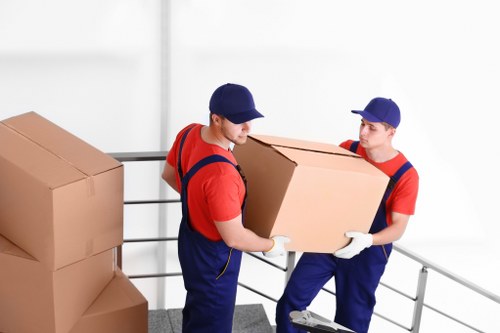 Training and competence: Staff undertaking removals, moving or packing duties will receive induction training, manual handling instruction and refresher sessions relevant to their role. Competence is monitored through observation and recorded safe work briefings. Continuing professional development for drivers of moving vans includes vehicle safety, load securing and fatigue management.
Personal protective equipment (PPE) expectations are clearly defined. Where required, operatives will wear durable gloves, safety footwear and high-visibility clothing. Additional protective measures may include back supports, knee protection and protective eyewear for specialist tasks. PPE is part of an integrated control strategy that includes safe systems of work and mechanical assistance.
Operational Controls, Vehicles and Equipment
 Vehicle and loading safety: All moving vehicles and lifting aids are inspected and maintained according to the operator's schedule. Load restraint, weight distribution and secure packing are mandatory before departure. Drivers and removal crews follow safe driving practices and avoid overloading. Vehicle condition checks and documentation are maintained to support safe removals operations.
Handling fragile, bulky or hazardous items requires specific controls. Items such as large furniture, electrical equipment and fragile artifacts are assessed and packed using appropriate techniques. Teams use correct lifting grips and two-person or mechanised lifts for heavy items. The removal company will use clear labelling, secure packaging and protective padding to reduce the risk of injury and product damage.
 Incident reporting, emergency response and review: All incidents, near misses and property damage are recorded, investigated and used to inform corrective actions. Clear emergency procedures are in place for medical events, fire, spillages or vehicle incidents. Regular audits and performance reviews help ensure this health and safety policy remains effective and practical for moving, removals and relocation operations. The policy is reviewed periodically to incorporate lessons learned and to improve safety culture.
Monitoring and continuous improvement: Leadership encourages a proactive safety culture where every operative is empowered to stop work if unsafe conditions arise. Routine toolbox talks, pre-job briefings and supervisor checks support compliance with this policy. Practical measures include:
- Pre-shift vehicle and equipment checks to confirm safety readiness.
- Clear task allocations to ensure suitably trained operatives handle specialist moves.
- Use of mechanical aids and team lifts to reduce manual handling exposure.
- Ongoing training and competence assessments for removals staff.
In summary, this health and safety policy for removals movers and moving teams emphasises hazard awareness, risk assessment, staff competence and safe use of vehicles and equipment. By embedding clear responsibilities, practical controls and a culture of continuous improvement, our removal teams work to protect people and property throughout every move.